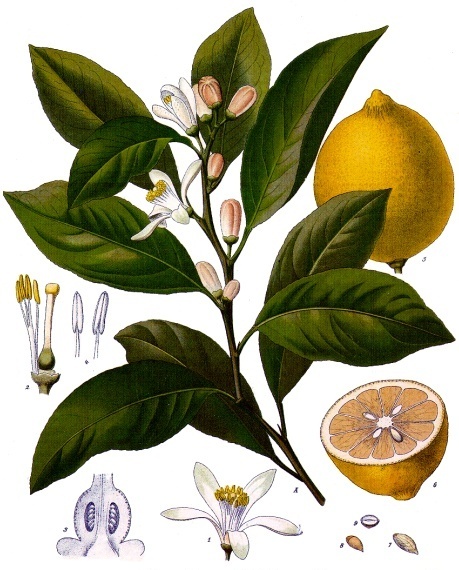
(中) 檸檬是被認為原產亞洲[1]的常綠小喬木,其果實為黃色橢圓狀,主要為榨汁用,有時也用做烹飪調料,有時候檸檬的果肉與果皮也會用於烹飪與烘焙。檸檬的果汁含有5%至6%的檸檬酸,使其嘗起來具有酸味。這種酸味使得檸檬被廣泛地適用於如檸檬汁等食品的生產中。
(ENG)
The tree's ellipsoidal yellow fruit is used for culinary and non-culinary purposes throughout the world, primarily for its juice, which has both culinary and cleaning uses.[1] The pulp and rind (zest) are also used in cooking and baking. The juice of the lemon is about 5% to 6% citric acid, which gives a sour taste. The distinctive sour taste of lemon juice makes it a key ingredient in drinks and foods such as lemonade and lemon meringue pie.
(中)
果實主要為榨汁用,有時也用做烹飪調料,但基本不用作鮮食,因為太酸。果實中含5%的檸檬酸。每升檸檬汁中含 501.6 毫克的維生素C和49.88克的檸檬酸。檸檬提煉出的精油可做為殺菌、收斂劑。增加身體對抗感染的抵抗力。對靜脈區張、胃潰瘍、焦慮、憂鬱、消化問題有幫助。幫助乳化、分解油脂。可用於頭髮潤絲、清潔傷口,及一些清潔產品中。
(ENG)
Fruit is mainly used for cooking, and sometimes also used as cooking seasoning, but the basic not used for fresh, because too sour. The fruit contains 5% citric acid. Each liter of lemon juice contains 501.6 mg of vitamin C and 49.88 g of citric acid. Lemon extract of essential oils can be used as sterilization, astringent. Increase the body against infection resistance. On the vein area Zhang, gastric ulcer, anxiety, depression, digestive problems helpful. Help emulsify, break down grease. Can be used for hair rinsing, cleaning wounds, and some cleaning products.

沒有留言:
張貼留言